
Fr. Dr Andria Saria Peace be with you, dear people Today we remember the Entry of the Lord into Jerusalem. But before this event, Christ raised Lazarus from the dead. This miracle is not only about Lazarus. It is also about us. Sometimes our soul becomes like a dead body.
Not physically, but spiritually. We lose prayer, we lose peace, we lose connection with God. But just as Christ called Lazarus out of the tomb, He also calls each of us, to come out from our spiritual death. And how do we come out? Through repentance.
What does the raising of Lazarus show? It shows the general resurrection and the Day of Judgment. In Palestine, people were usually buried on the same day they died, because of the heat. By the fourth day, Lazarus’ body had already begun to decay. His resurrection was not only a return to life, but also like being created again.
This shows how the Lord will raise all people from the dust. Christ also entered Jerusalem not on a horse, but on a donkey. A horse is for war. A donkey is for peace. At that time, kings used such animals in times of peace.
Horses were used for war. Jesus rode a young colt to show that He brings peace and that He is the King of Peace. This shows us something very important: we do not always need to fight others. The real war is inside us. When pride comes, when anger comes, when we want to show that we are better, this is the moment to fight.
Not with others, but with ourselves. True humility is also a kind of war, a war against our own weaknesses. And when Christ entered the Temple, He cleansed it. This Temple is also a symbol of our heart. The chief priests told Christ to stop His disciples from praising Him.
But He answered: “If they keep silent, the stones will cry out” (Luke 19:40). The Holy Fathers say that the “stones” mean the Gentiles, who later praised God. The Gospel also says that children cried: “Hosanna! ” These children represent simple and pure hearts. God accepts praise only from a pure heart.
Today, we stand in church holding branches. People welcomed Christ with palm branches as a victor. The willow branches we use also mean resurrection, because they bloom early after winter. Holding these branches, we confess that Jesus Christ is the true victor over death and evil. We ask Him to help us meet Him not with fear, but with joy on the day of resurrection.
“Hosanna” means: “The Lord is coming,” “Salvation is from the Lord,” “Lord, save us! ” On this feast, the Lord also comes close to our hearts. Sometimes our heart is full of noise— thoughts, passions, distractions. Instead of prayer, there is confusion. That is why Christ comes, not only to be welcomed with “Hosanna,”but to cleanse what is inside us.
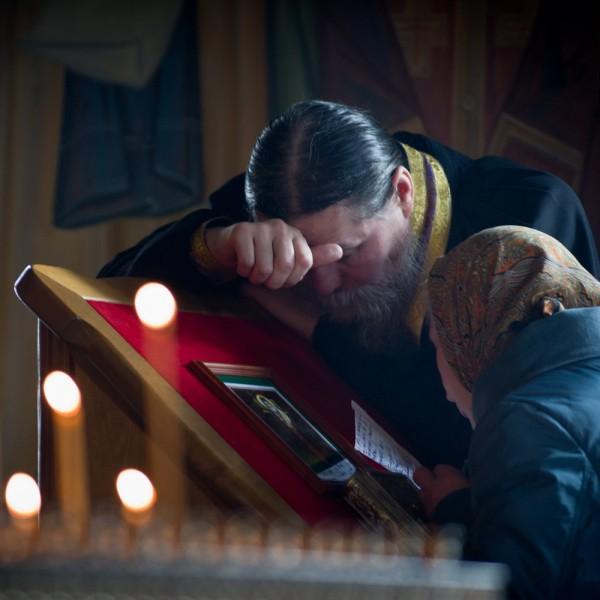
And this cleansing has a name. Confession. This is how we let Christ enter our heart, how we let Him raise our soul, how we fight our pride, and how we clean our inner temple. Confession is one of those difficult topics. People do not enjoy going deep into it.
But after confession, you truly feel relief. It feels like a heavy burden has been taken away from you— something you carried for a long time without even understanding how much it was weighing you down. Confession is not something invented by people, and it is not about power or control. Confession is also a burden not only for the person who confesses, but also for the one who listens, because he becomes part of it. In the Holy Scripture, we have clear teaching about confession, so we do not think it was invented by the Church.
Even before Jesus appeared, many people went to John and spoke with him. They wanted to heal their souls. The first people in the Church began their spiritual life with confession. Imagine how hard it is to begin your spiritual life this way. But this is trust and surrender, trust in the holiness of the Church.
Many people went to John. They were not only baptized, but also confessed their sins. As the Gospel of Matthew says: “And were baptized by him in the Jordan, confessing their sins” (Matthew 3:6). Confessing sins takes great effort. It needs honesty and spiritual life.
John the Forerunner said: “Repent, for the kingdom of heaven has come near” (Matthew 3:2). There is no other way to the Kingdom of Heaven except repentance, and there never will be one. In this way he called the people to repentance. Then, those who wished to receive baptism from him were brought into the waters of the Jordan River. He also entered the river with them.
There, a person confessed their sins to John the Baptist, and the Prophet prayed to God for their forgiveness. Then, after the confession was completed, John the Forerunner would say, “I baptize you in the name of the coming Messiah,” and would immerse the person in the waters of the Jordan. Brothers and sisters! Hermas writes in The Shepherd: “If the Lord had not granted us repentance, not a single person would be saved. ” The Holy Fathers say: “The first gift of grace, the first gift of the Holy Spirit, is the knowledge of one’s sins.
”If a person says he has no sin, he deceives himself: “If we say that we have no sin, we deceive ourselves… If we confess our sins, He is faithful… to forgive us” (1 John 1:8–9). Repentance and baptism are closely connected. When a person is baptized, sins are forgiven. When a person repents, sins are forgiven. But if a person does not repent, he cannot grow spiritually.
He becomes worse, and his soul becomes harder. One of the greatest illnesses is trusting only yourself, thinking you are very wise. The Apostle John always told people: “Repent. ” The apostles repeated the same words: “Repent…” (Acts 2:38). And also: “Many who had believed came confessing and telling their deeds” (Acts 19:18).
Sin has deep roots. Often we think sin is only physical action, but it begins in the mind. I will not list sins, because this is not comfortable to discuss. Each person knows inside what separates them from God. When grace touches a person’s heart, then the person feels how far he is from God.
Saint Anthony the Great said before his death: “All my long life was nothing but unceasing weeping for my sins. ” Sometimes people in the world would ask the ascetics: “Why do you spend your whole life in weeping and repentance, while many in the world commit serious sins and yet do not consider themselves sinners? ” The Holy Fathers give such examples: when water is muddy, nothing can be seen in it; but when it becomes clear, even small stones and grains of sand can be seen. In a dark cellar, dirt is not visible, but if a ray of light enters, we see thousands of tiny dust particles in that light. The purer a person’s soul becomes, the more clearly he sees his sins.
The Book of Proverbs lists things God hates, and the first is pride. Pride is like deadly poison. It was pride that was whispered to the first humans: “You will be like God” (Genesis 3:5). Even in confession, it is hard to see our own sins. We often blame other people or situations.
Many people explain their actions instead of simply saying, “I did wrong. ” When people start going to church, sometimes they think: “I am already a good person. ” Maybe they come because their spouse comes, or because they like the atmosphere. These are not bad reasons, but they are not enough. If this continues, the soul becomes cold.
A person can look like a Christian on the outside, but inside the heart is empty. One of the hardest things is that people do not want to share their secrets. This is natural. People want to feel safe and think no one knows. But this is not true.
When you do something wrong, it is not only you who knows. Others may know, and God knows. Your guardian angel knows. Even evil knows. So, it is not hidden.
Confession helps you become free from this. A big obstacle to confession is this thought: “Someone else will know what I want no one to know. ” Feeling shame is normal, but you should not stay in it. Every time you fall, you must stand up again. This is a lifelong process.
Evil tries to convince us: “You already confessed this. Why again? Aren’t you ashamed? ” This is how pride grows. But God wants your heart.
He says: give Me your heart, speak to Me, confess. God asked Adam: “Who told you that you are naked? ” As one bishop said: “There are no completely private sins… Even secret thoughts affect others. ” The soul dies when a person does not fight sin. There is a saying: “Commit a sin twice, and it will not seem a crime.
” People ask: how often should we repent? John Chrysostom said: “Have you sinned? Do not despair… If you sin every day, then repent every day. ” Growing up spiritually is hard. One of the hardest things is to say: “I’m sorry.
” Confession in church, especially before a priest, is very difficult. You may share your sins with a friend, but it is not the same. It is like eating bread at home versus receiving Holy Communion in church—there is a big difference. The blessing from the Church is much greater than blessing yourself. In ancient times, when a king wanted to visit his lands, his servants would prepare long before.
They cleared and widened the roads, built new paths, and made bridges, so the king could see all the borders of his kingdom. But the Kingdom of God is the human soul. How can the way of grace reach the heart? Only through repentance. Brothers and sisters!
What is repentance? Repentance is a person’s judgment upon himself before the Last Judgment. In a worldly court, the harsher the judge is toward a criminal, the heavier the sentence. But here it is the opposite: the stricter the conscience rebukes a person, the more complete his forgiveness, and the closer his salvation. What does repentance consist of?
For it to be true, the following are needed: First, sorrow for one’s sins. Second, a sincere confession before a priest, someone given the special authority to forgive and absolve sins. But confession, as I have said, should not be only a conversation, not just a telling of one’s sins, but a weeping for them. For often people speak about their sins without any repentance, and sometimes even with pride. Then, third, a person must resolve not to repeat those sins, to be ready rather to die than to sin again.
There is an old saying: “A wise man does not fall twice in the same place. ” And finally, the fourth condition: a person must strive to practice in his life the virtues opposite to the sins he has committed before. Then, brothers and sisters, our repentance will be accepted by God. Repentance is the foundation of the whole spiritual life of a Christian. Why are we cold on great feasts?
Why, when we receive Communion, do we not feel that fire and light entering our hearts? Only because we have not awakened, softened, and cleansed our soul through repentance. And an unrepentant heart is hard like stone. An unrepentant heart is a door closed before Jesus Christ. There is an ancient story of how the Lord sent His Angels to bring Him the best they could find on earth.
And each Angel brought a gift from the earth to God. Only one did not. But then he appeared and said to the Lord: “I have brought You as a gift a tear of a sinner. I saw how at night a sinner, despised by the whole world, wept bitterly alone for his sins and prayed for forgiveness. I took his tear and brought it to You.
” And the Lord said: “This is the best gift. The tear of a repentant sinner is a precious gift to Me! ” So, brothers and sisters, just as the memory of death, rooted in a person’s heart, gives him courage to endure all the changes of life and gives him deep peace, so repentance ends in heavenly peace and pure joy. May the holy John the Forerunner, the protector of those who repent, teach us true repentance, so that we may become partakers of the grace of the Holy Spirit. We do not know ourselves well.
There is a path from one person to another that leads to repentance, and true knowledge of a person begins after repentance. This is a mysterious wonder: when your greatness is not only felt by you, but also experienced and seen by others. Amen.